
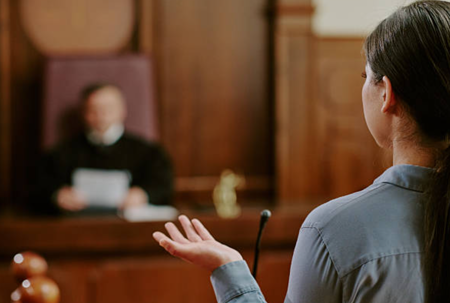
Seeing a court date for a DUI on your citation from Clackamas County can make your stomach drop. You might picture walking into a courtroom you have never seen before, standing alone in front of a judge, and not knowing whether you will walk back out. That fear is real, and most people facing a first DUI feel the same way in the days leading up to arraignment.
Right now you are trying to answer some basic questions. Is this the day the judge decides if you go to jail? Will you lose your license on the spot? Are you supposed to plead guilty to get it over with, or wait and talk to someone first? Our goal here is to walk you through what actually happens at a DUI arraignment in Clackamas County, step by step, so you know what to expect and what you can do to protect yourself.
At James O'Rourke, we have been providing criminal defense and DUI representation in the Portland metro courts, including Clackamas County, for more than 40 years. We regularly stand beside clients at this exact first appearance, and we know how local judges typically run their arraignment calendars. In this guide, we share that experience in plain language so you can walk into court with a clearer head and a real plan.
What A DUI Arraignment In Clackamas County Really Is
A DUI arraignment is your first formal court appearance after a DUI arrest in Clackamas County. The court’s main jobs at this hearing are to make sure you know what you are charged with, advise you of your rights, and record an initial plea. The arraignment is not a trial, and it is not the day the judge hears evidence about what happened on the road.
At a typical DUI arraignment, the judge or clerk calls your name, confirms your identity, and makes sure you have seen a copy of the charging document. That document lists the DUI charge and any related counts, such as reckless driving or additional traffic offenses. The judge will tell you the maximum penalties that could apply under Oregon law, not because they are deciding that day what will happen to you, but because the court is required to ensure you understand the stakes.
One of the biggest misconceptions we see is the idea that arraignment is when guilt is decided. In reality, this hearing is more like a starting line. The judge wants to know whether you have or want a lawyer, whether you understand your rights, and how you wish to plead at this point. For almost everyone facing a DUI, the smart move at arraignment is to enter a not guilty plea so you and your lawyer can get the police reports, breath test records, and other discovery and then talk about options such as diversion.
After decades of standing next to people at this first appearance, we can say that arraignment usually lasts only a few minutes per case. It feels huge to you because it is your life, but to the court it is one part of a busy calendar. Understanding that this is a procedural hearing, not your one shot to explain yourself, helps you focus on what matters, which is preserving your rights and keeping doors open.
What To Expect The Day Of Your DUI Arraignment
On the day of your arraignment, you will go to the Clackamas County courthouse listed on your citation or release paperwork. Plan to arrive early, because parking, security, and finding the right courtroom can take longer than you expect. You will go through a security checkpoint at the entrance, similar to the airport, and then follow posted signs or information screens to the correct courtroom.
When you walk into the courtroom, you will probably see several other people waiting for their own cases to be called. Arraignment dockets in Clackamas County can be crowded, so it is common to sit and wait while the judge works through a list of cases. You will see people go up one by one, stand at the front of the courtroom, hear the judge speak, answer a few questions, and then step away. This can be nerve-wracking, but it also gives you a chance to see how the judge speaks and what the process looks like before your name is called.
If you have hired us before your arraignment, we will either meet you at the courthouse or connect with you there, so you do not have to guess where to sit or when to stand. When your name is called, you will go to the front, usually to a marked table or podium. The judge will confirm your identity, may ask if this is your correct address, and will want to know whether you have a lawyer. If we are there with you, we will speak up on your behalf.
The actual time you spend in front of the judge is usually brief. The judge or clerk will summarize the charges, advise you of your rights, and ask how you want to plead. If there are any questions about your release status or whether you have been following prior conditions, those can come up here as well. Once your plea is entered and any immediate issues are addressed, the court typically sets your next court date and you are directed back to your seat or out of the courtroom.
We know this whole experience can feel overwhelming if you have never been in court before. Part of our role in Clackamas County DUI arraignments is to make the environment less intimidating. When you know where to go, how the judge runs the calendar, and what you will be asked, you can focus on staying calm and following through on the plan we have discussed.
How Charges, Pleas & Rights Are Handled At Arraignment
During your arraignment, the court formally addresses three key areas, the charges against you, your rights, and your initial plea. For many people, this is the first time they hear the DUI charge spoken in legal terms and see the full list of potential counts. Hearing words like “Driving Under the Influence of Intoxicants” and maximum jail or fine numbers can be frightening, even though the judge is not deciding those penalties that day.
The judge will also advise you of your rights. These usually include the right to a lawyer, the right to a trial, the right to make the state prove the charge beyond a reasonable doubt, and the right to remain silent. This is not just a formality. Anything you say in court can be recorded and used later, so this is not the time to try to explain your side of the story in detail. We consistently counsel clients to keep their answers brief and focused on the judge’s direct questions, and to save case discussions for private meetings with us.
When it comes to your plea, the judge will generally ask whether you wish to plead guilty, not guilty, or no contest. It may feel tempting to plead guilty, especially if you feel ashamed or just want the situation to end. However, entering a guilty plea at arraignment often shuts down opportunities you have not had a chance to explore, such as Oregon’s DUI diversion program or other negotiated resolutions. A not guilty plea at this stage is usually a procedural step, not a declaration that you will fight the case all the way to trial no matter what.
By pleading not guilty at arraignment, you allow time for us to obtain and review the police reports, breath or blood test data, dash or body camera footage, and any other evidence. We can then talk with you about the strength of the case, diversion eligibility, treatment options, and realistic outcomes. Courts in Clackamas County are used to DUI defendants pleading not guilty at arraignment, so the judge will not see this as disrespectful. It is simply how the process is designed to work.
Over more than four decades in criminal defense, we have seen many people hurt their own cases by talking too much at arraignment or making rushed decisions about pleas. Our job is to protect you from that. When we stand with you, we can handle most of the talking, make sure your rights are clearly stated, and enter the plea that keeps your options as open as possible while we build a thoughtful plan.
Release Conditions, Bail & What Happens After Court
One of the biggest fears people have before arraignment is that they will be taken straight to jail from the courtroom. In many Clackamas County DUI cases, especially first offenses without serious injury or other aggravating factors, people remain on release after arraignment under certain conditions. It is still important to understand how release and conditions work so there are fewer surprises.
There are two main questions the court looks at. First, will you be allowed to remain out of custody while your case is pending. Second, if you are released, under what conditions. For many DUI defendants, the court either continues release on recognizance, meaning you are trusted to come back to court without posting money, or sets bail if there are concerns about safety or appearance. Factors such as prior criminal history, past failures to appear, a very high blood alcohol content, or an accident with injuries can make bail more likely, but outcomes vary from case to case.
Release conditions can have a big impact on your daily life. Common DUI related conditions include no consuming alcohol, no driving without a valid license and required ignition interlock device, submitting to alcohol testing or monitoring, completing an alcohol or drug evaluation, and having no contact with any listed victims. The judge wants to lower the risk that you will commit new offenses or miss court dates while the case moves forward. Some conditions are fairly standard, and others can be tailored based on your situation and any proactive steps you have already taken.
For example, a person with a first DUI and no crash who has already scheduled a treatment evaluation and started attending recovery meetings often looks different to the court than someone with prior DUIs who has not taken any steps. We have seen courts respond positively when they hear that a person is already engaged in addressing alcohol use or mental health, and that can sometimes influence whether conditions are more or less restrictive. There are no guarantees, but preparation matters.
Once your plea is entered and release issues are addressed, the court typically schedules your next date, often a pretrial or similar setting. You usually receive paperwork with that date and with any conditions written down before you leave. After court, your job is to follow those conditions exactly and to keep in close touch with your lawyer. At this stage we are often coordinating evaluations, gathering documents, and starting conversations about diversion or other resolutions while you keep working and caring for your family.
How Your Arraignment Affects DUI Diversion & License Issues
Many people have heard about Oregon’s DUI diversion program but are not sure how arraignment fits into that picture. Diversion is a program that can, in some cases, prevent a DUI conviction from going on your record if you meet strict conditions over a set period of time, including treatment, abstinence, and monitoring. Eligibility depends on your history and the details of the current case, and the decision to enter diversion usually comes after arraignment, not during it.
Your arraignment matters because it starts the formal court timeline. After this first appearance, the case has a case number, a next court date, and a judge assigned. From that point, there are deadlines and procedures that affect when and how you can apply for diversion if you qualify. Entering a guilty plea at arraignment without legal advice can close off your ability to use diversion, or can lock you into terms that do not match your situation.
At the same time, your driving privileges are affected by a separate process through the DMV, based on whether you took or refused a breath or blood test and what the result was. That administrative process often has its own deadlines that can fall close to, but not exactly on, your arraignment date. While arraignment itself does not automatically take your license, what you and your lawyer do in the days and weeks around arraignment can affect whether you request a hearing, obtain a hardship permit later, or plan around a suspension.
In our practice, we look at the court case and DMV issues together from the very beginning. When someone contacts us before or right after arraignment, we review the citation, implied consent paperwork, and other documents to identify diversion possibilities and license timelines. That way, decisions about pleas and programs are made with the whole picture in mind, not in a rush at the podium in front of the judge.
The key point is that arraignment is the opening move in a longer process. Handling it correctly, with an eye toward diversion and driving, can keep important options open. Handling it impulsively, just to end the discomfort, can create avoidable problems that are hard to unwind later.
Steps You Can Take Before Your Arraignment To Help Your Case
The time between your arrest and your arraignment can feel like a fog. You might be tempted to push the whole thing out of your mind until the court date arrives. In our experience, using this window for a few concrete steps can both lower your anxiety and put you in a better position when you stand in front of the judge.
Start by gathering every document you received, including the citation, any release agreement, implied consent paperwork, and anything you signed or received when you were released from custody. Keep these in one folder so nothing gets lost. Having this information organized makes it much easier for us to quickly understand your situation when we talk, and it reduces the risk of missing a date or misunderstanding a condition.
Next, consider contacting a DUI defense team as soon as you can. When we speak with someone before arraignment, we can review their paperwork, answer specific questions about what to expect in Clackamas County court, and decide whether we will appear with them. We also start looking at whether they might be a candidate for diversion, what treatment resources make sense, and what personal responsibilities, such as work schedules and childcare, need to be considered when planning for court and conditions.
Proactive steps can also include scheduling an alcohol or drug evaluation with a reputable provider, attending recovery meetings, or reconnecting with mental health support if anxiety, depression, or trauma are part of the picture. Courts and prosecutors often see these efforts as signs that you are taking the situation seriously, not waiting for the system to force action on you. There is no one right path for everyone, and not all steps will be appropriate in every case, but doing nothing until the day of arraignment rarely helps.
Our firm has a long history of integrating recovery into legal defense, especially in cases rooted in addiction and mental health. We help clients find programs that fit their needs and then, when appropriate, we present that recovery work to the court as part of a broader picture of who they are and where they are heading. This approach does not erase what happened, but it often shifts the conversation toward treatment and rehabilitation instead of only punishment.
What To Do If Addiction Or Mental Health Played A Role In Your DUI
Many DUI cases in Clackamas County grow out of deeper struggles with alcohol, drugs, anxiety, or other mental health issues. If this describes your situation, you may feel a mix of shame and relief that the crisis has finally forced the issue into the open. You may also worry that talking about addiction or mental health will make the court see you as more dangerous, not less.
In our experience, judges and prosecutors tend to look more favorably on people who acknowledge these underlying problems and engage in meaningful treatment, compared to those who insist nothing is wrong. The key is to approach this thoughtfully. That usually means getting a professional evaluation, starting or continuing counseling or treatment, and documenting your efforts in a way that can be shared later through your lawyer, not by making emotional speeches at arraignment.
We often work with clients to connect them with appropriate programs, whether that is outpatient counseling, intensive outpatient treatment, support groups, or mental health services. Over time, this work can produce treatment records, progress reports, and letters from providers that help us show the court that you are more than a police report. While arraignment itself is usually not the setting where all of this is presented, the steps you take now can influence later discussions about conditions, diversion, and longer term outcomes.
Our practice has deep roots in the recovery community and in supporting young adults and others who are trying to turn a crisis into a turning point. We have seen courts respond to genuine, sustained recovery efforts with a greater willingness to consider treatment focused resolutions. No one can promise a particular result, but we can help you build a path that serves both your legal case and your health.
When & How To Get Legal Help Before Your Clackamas County Arraignment
Waiting until the morning of your arraignment to think about legal help leaves you reacting instead of planning. Contacting a DUI defense team as soon as you can after an arrest in Clackamas County changes the experience. Instead of walking into the courthouse unsure what will happen, you walk in knowing the steps, knowing what you will say, and often with a lawyer standing right next to you.
When someone calls James O'Rourke before arraignment, our first steps are simple but important. We listen to how the arrest unfolded, review the citation and other paperwork, and talk through the arraignment date, time, and location. We explain, in concrete terms, what will happen in that courtroom based on our many years in those same halls, and we discuss whether we will appear with you or, in some situations, for you if the court and circumstances allow.
From there, we outline immediate tasks, such as securing and organizing documents, considering an alcohol or mental health evaluation, and making practical arrangements for work or childcare on the court date. We go over potential release conditions so they do not catch you off guard, and we start mapping out how diversion, treatment, and DMV issues may come into play later. All of this is aimed at turning a frightening unknown into a sequence of manageable steps.
We know DUI arrests do not happen on a nine to five schedule, and arraignment dates sometimes come up fast. Our team is available 24 hours a day for emergencies, so you are not left waiting days for answers while the court date approaches. Reaching out is not about admitting defeat; it is about taking back some control and putting someone in your corner who has navigated this process for decades.
Talk With A Defense Team That Knows Clackamas County DUI Arraignments
A DUI arraignment in Clackamas County may feel like the moment everything will come crashing down. In reality, it is the first formal step in a process that you can influence by understanding what will happen, showing up prepared, and getting thoughtful guidance. You do not have to walk into that courtroom alone, hoping you say the right thing.
If you have an upcoming DUI arraignment, we invite you to talk with us about your case, your concerns, and your options. We can explain how the local court handles these hearings, review your paperwork, and help you start addressing any underlying addiction or mental health issues that played a role. That combination of legal strategy and recovery focused support is how we work to help people turn a frightening charge into a structured path forward.
Call (503) 506-2836 to speak with James O'Rourke about your Clackamas County DUI arraignment.